Can a Micro-Adventure Help You Find Purpose Again?
What Adam Faulkner’s 16-month cycle to Japan teaches us about fear, identity and choosing a life that feels like your own
Purpose rarely arrives as a perfect plan. More often, it begins with a small decision to move towards something that matters—even when other people do not understand it.
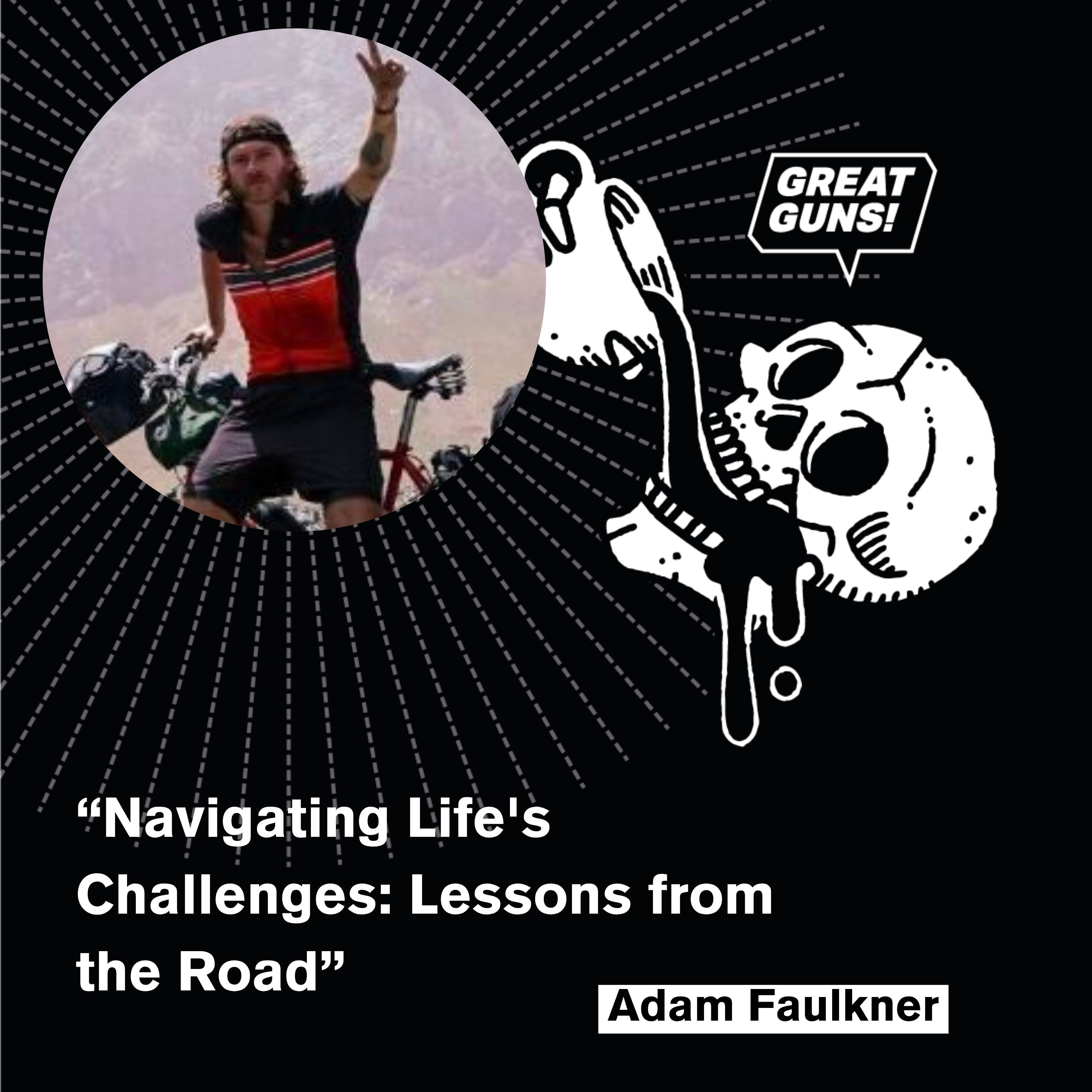
Adam Faulkner had a well-paid career as a television producer in London when he and a close friend decided to cycle to Japan. The idea sounded reckless to some people around him. To Adam, it became a 16-month journey that changed his relationship with risk, freedom and the direction of his life.
His experience was not a military transition, but the lesson speaks directly to those leaving service: when a familiar identity falls away, you do not always need to know the whole route. You need enough courage to take ownership of the next move.
Why Can Leaving a Familiar Life Feel So Difficult?
Leaving a familiar life is difficult because it is not only a practical change; it is an identity change.
For a service leaver, the uniform carries structure, status, shared language and an immediate sense of belonging. Civilian life can feel less defined. Other people may offer advice through the lens of their own fears, just as Adam’s family initially saw his trip through concerns about safety and career security.
Those concerns may come from love, but they cannot make the decision for you. Adam listened without surrendering ownership. His response was effectively: I hear you, I have considered the risks, and I am going to do it anyway.
That is a useful distinction for anyone rebuilding life after service. You can respect advice without allowing it to become your new chain of command.
Do You Need a Complete Plan Before You Start Again?
No. You need preparation and a direction, but you do not need every stage of the journey mapped before you begin.
Adam did not simply wake up and cycle to Tokyo. He spent several months preparing, obtaining equipment and untethering himself from his old life. Yet the full experience could never have been planned in advance. Weather, borders, illness, danger and unexpected kindness had to be dealt with as they appeared.
Military experience can make uncertainty uncomfortable because service life often provides a recognised objective, a team and a system. Transition removes much of that framework. The answer is not to wait until uncertainty disappears. It is to prepare intelligently, choose a direction and remain adaptable.
A plan should help you move. It should not become an excuse to remain still.
What Is a Micro-Adventure?
A micro-adventure is a small, deliberate step beyond your normal comfort zone that helps you rediscover curiosity, confidence and agency.
Adam uses the phrase for actions that do not require a 16-month expedition. It might be speaking to a stranger, attending an unfamiliar event, trying a new activity, contacting a potential mentor or finally having a conversation you have been avoiding.
For a veteran, a micro-adventure might mean joining a community outside the military, testing a business idea, volunteering, learning a new skill or taking a first step towards a role that feels meaningful.
The scale is not the point. The point is proving to yourself that you can still enter unfamiliar territory and find your way through it.
“Growth is uncomfortable, but that discomfort is often evidence that you are moving again.”

How Can Veterans Rebuild Confidence After Service?
Veterans rebuild confidence by creating fresh evidence of who they are becoming, not by waiting to feel ready.
Adam described the powerful feeling that follows doing something you had considered avoiding. One experience builds on another. The first small success makes the next decision easier, and confidence begins to compound.
This matters after leaving service because past competence does not always transfer automatically into civilian self-belief. You may know that you led people, solved problems and operated under pressure, yet still feel uncertain in a new workplace or community.
New confidence comes from action. Start small enough to move, but make the step meaningful enough to matter. Do something that your future self would recognise as progress.
What Does Calculated Risk Look Like in Civilian Life?
Calculated risk means acknowledging genuine danger while refusing to let fear govern every decision.
Adam never pretends that every place or decision is safe. During his journey, he encountered serious risks and had to make informed choices. His lesson is not to ignore fear. It is to stop fear growing unchecked until it closes every available door.
Many veterans become trapped between two extremes: choosing only what feels safe or feeling they must recreate the intensity of military life. Neither is necessary. Civilian courage may look quieter. It can mean applying for a role before you feel perfectly qualified, asking for help, admitting that an old plan no longer fits or starting again in public.
Courage is not the absence of fear. It is having a personal system for moving while fear is present.
Can Purpose Be Found Through Freedom?
Purpose can grow through freedom when freedom is connected to responsibility and meaningful choice.
After returning from Japan, Adam built a video-production business. What he values most is not simply being self-employed; it is having the freedom to choose his direction, the people he works with and the kind of life he is building.
For veterans, freedom can initially feel like a loss of structure. Yet it is also an opportunity to decide which values from service still belong in the next chapter. Discipline, loyalty, humour, service and courage do not disappear when the uniform comes off. They can become foundations for a new mission.
The task is not to recreate the military in civilian life. It is to carry forward what was best in you and give it a new place to serve.
Final Thought
Transition is often described as a journey, but Adam prefers the word adventure. A journey can sound as though you are being carried towards a destination. An adventure asks you to participate.
That difference matters.
Leaving service is not simply something that happens to you. It is a chance—sometimes painful, sometimes liberating—to decide what you will move towards, who you will move with and what kind of contribution will make the next chapter worthwhile.
You may not need a dramatic reinvention. You may need one micro-adventure: one conversation, one application, one invitation accepted or one honest decision.
The better question may not be, “What is my purpose now?”
It may be, “What small action would help me feel alive, useful and connected again?”
Listen to the episode > Full Episode