Leaving the military is rarely one clean move
Leaving the military is rarely one clean move from uniform to certainty. A service leaver can secure a strong civilian position, appear to have landed well and still discover that the deeper transition has only just begun.
Frank A. Davis Jr served for 26 years in the United States Marine Corps. He joined at 19, worked across engineering, operational support and logistics, and eventually became a warrant officer. The Corps gave him identity, standards, community and proof that he could achieve far more than he had once imagined.
After retiring, Frank became a director of procurement in the medical life-sciences sector. A year later, he was made redundant. The job disappeared, the confidence attached to it was shaken and the question returned: who am I when the title goes as well as the uniform?
Is military transition complete once you secure a civilian job?
No. Employment can provide income and direction, but it does not automatically rebuild identity, belonging or purpose. Frank is honest that, two years after leaving the Marines, he still considers himself to be in transition.
His first civilian role looked like the expected next step. It used his logistics background, carried senior responsibility and appeared to confirm that his experience had transferred. When the company reduced its workforce, however, that apparent certainty vanished.
A job offer can be an important milestone, but it is not the finish line. A durable transition needs foundations that remain when an employer, industry or plan changes.
Why can redundancy hit a veteran particularly hard?
Because military service often joins role, status, community and self-worth together. Frank had spent his entire adult working life in the Marines. He knew how to lead, solve problems and serve a mission. In civilian employment, he discovered that performance and loyalty do not always guarantee security.
The way the redundancy was handled also mattered. Frank arrived prepared for a senior leader’s visit and found Human Resources waiting. On the drive home, he faced unfamiliar emotions, financial uncertainty and the responsibility of telling his fiancée that the future they had planned had changed.
The loss was not simply a salary. It challenged the belief that progress after retirement should always move upwards. For somebody conditioned to keep advancing, an unexpected reversal can feel like personal failure even when it results from a business decision.
What should service leavers understand about civilian employment?
Civilian organisations operate under different pressures and assumptions. Restructures, acquisitions, market conditions and internal politics can affect a role regardless of how committed the employee has been.
That does not mean veterans should become cynical. It means they should avoid placing their entire post-service identity inside one employer. Learn the commercial environment, notice risk, ask direct questions and keep relationships alive beyond the organisation.
Military work may reward certainty, commitment and trust in the chain of command. Civilian resilience also requires options: an active network, current qualifications, financial awareness and a sense of purpose that is larger than a job title.
How do you keep moving when the original plan collapses?
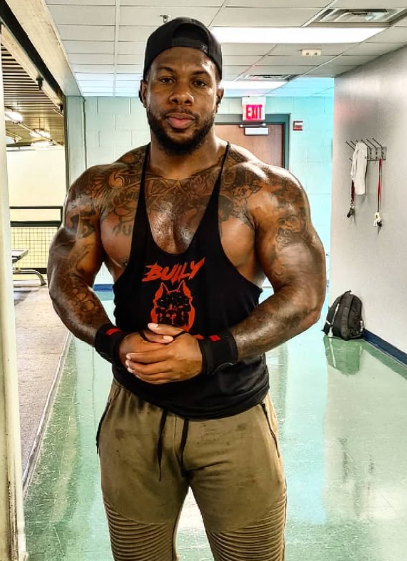
Protect the routines that remind you that you still have agency. Frank continued getting up and going to the gym. He refused to allow unemployment to dissolve the structure of his days or leave him in the same place months later.
He also returned to education as a full-time student at the University of San Diego, pursuing an MBA alongside a master’s degree in supply chain management. Study gave his time direction while strengthening the expertise he wanted to take forward.
Routine does not remove disappointment, but it creates movement when motivation is unreliable. Physical activity, learning and small daily commitments can hold the line until a clearer mission emerges.
“The first civilian job may disappear. Your experience, discipline and capacity to serve a new mission do not disappear with it.”
Why is genuine networking more powerful than job hunting alone?
Because transition requires a new community, not merely a list of vacancies. Frank describes networking as building real relationships with people in the places and professions where you hope to contribute.
He joined his local supply-chain professional community and became involved with the San Diego Veterans Coalition. These connections were not treated as transactions in which every conversation had to produce an interview. They helped him learn the civilian landscape, remain visible and contribute to a community.
Frank’s idea is simple and powerful: service leavers should be received into civilian life with something like the sponsor system used for a new military posting. A local connection can explain the terrain, introduce the right people and prevent somebody arriving alone to work everything out from scratch.
How can veterans separate purpose from position?
Start by asking what the role allowed you to contribute. Frank valued logistics because it combined problem-solving, relationships and getting essential support to people who needed it. Those motives survive even when a particular position does not.
Purpose is more stable when it is expressed as service, contribution or impact rather than a single title. The next job matters, but it is one vehicle for the mission—not the whole mission itself.
This shift also makes adaptation easier. A veteran can change sector, study, mentor, volunteer or build community connections without believing every change has erased what came before.
What does a stronger second transition look like?
It is not pretending that the setback did not hurt. Frank speaks openly about sleepless nights, pressure in his chest, questions about self-worth and the silent battle of trying to protect his family from his fear.
A stronger transition makes room for those feelings while continuing to build. It involves talking earlier, maintaining health, developing skills and accepting that uncertainty is not evidence of worthlessness.
Most importantly, it replaces isolation with belonging. Veterans need people who understand the old world, people who can explain the new one and opportunities to become useful within a community again.
Final Thought
Frank Davis’s story challenges the tidy version of military transition in which a veteran removes the uniform, secures a good job and never looks back.
Sometimes the first plan fails. Sometimes the civilian role disappears. That does not send the veteran back to zero; it reveals which parts of the new identity need stronger foundations.
If your title vanished tomorrow, what purpose, relationships and daily disciplines would still help you move forward?
Listen to the episode > Full Episode