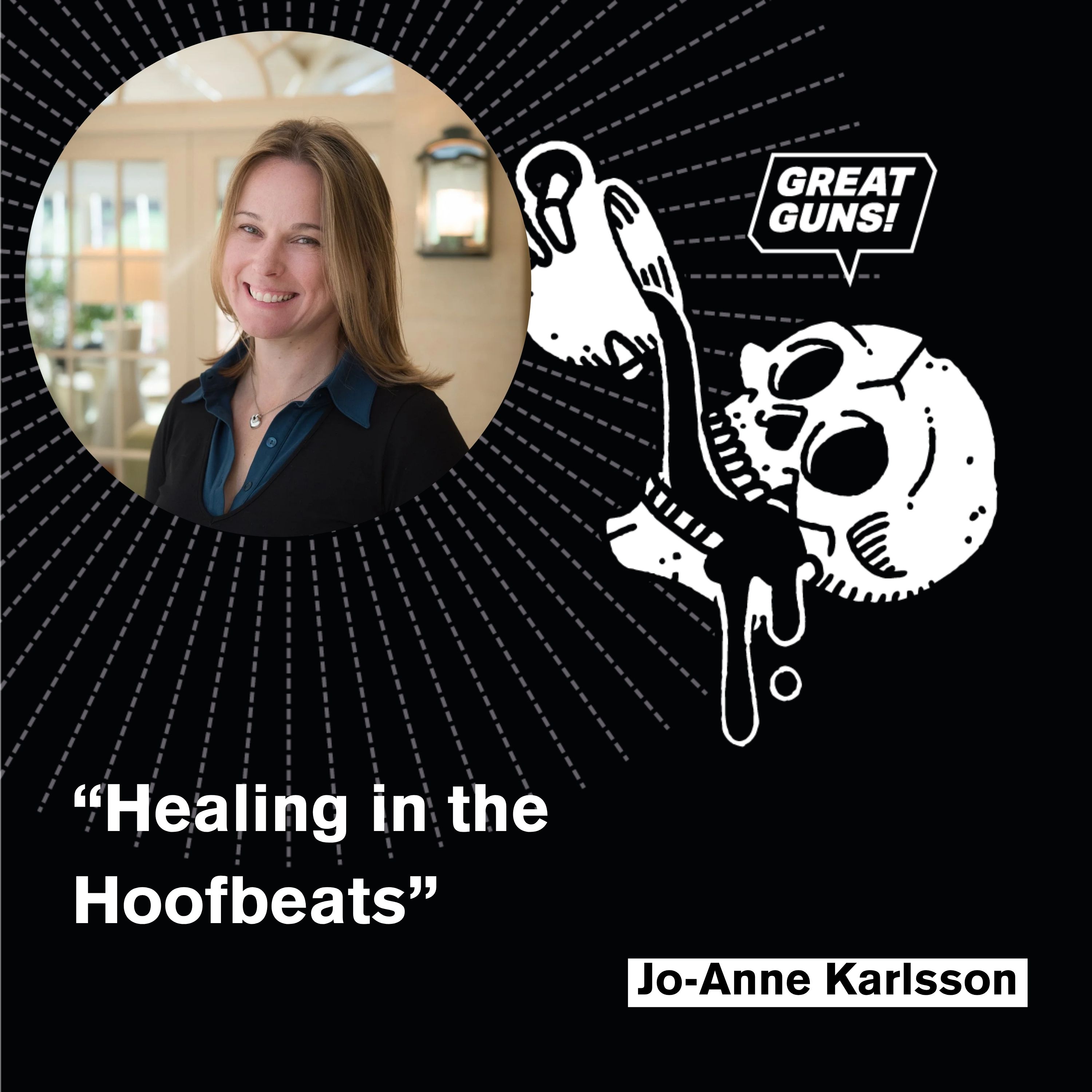
How Can Veterans Rebuild Trust When Words Are Not Enough?
Jo-Anne Karlsson on equine-facilitated therapy, vulnerability and finding a safe route back to connection
Veterans do not always need more pressure to explain themselves. Sometimes healing begins in an environment where they can notice what is happening, feel safe enough to be vulnerable and rebuild trust without having to produce the right words immediately.
Jo-Anne Karlsson is a psychotherapist and director of LEAP Equine. She trains equine facilitators and works with people affected by trauma, addiction, anxiety and other difficult experiences, including serving personnel and veterans.
Her work offers a different route into recovery: outside the therapy room, alongside horses that respond to what is happening in the present rather than judging somebody by a diagnosis, rank or past.
Why can conventional talking therapy feel difficult for veterans?
Because vulnerability can feel incompatible with years of being trained to get on with the task. A service leaver may have spent decades containing emotion, maintaining boundaries and protecting other people.
Sitting opposite a stranger and being asked to explain the most difficult parts of life can feel exposing. If trust has already been damaged, the pressure to talk may reinforce the instinct to withdraw.
Jo-Anne stresses that therapy is relational. Before meaningful work begins, the person is asking: Can I be safe with you? Will you hear me? Will you understand what I am trying to say?
Why work with horses?
Because horses offer immediate, non-judgemental feedback. They live in the present and respond to body language, energy, distance and behaviour without attaching a story to the person in front of them.
In Jo-Anne’s sessions, horses are free within their own environment. They can approach, remain at a distance or step away. That choice matters because the work is not about using an animal as a tool; it is about observing a relationship between two beings with boundaries.
A veteran who interprets a horse’s distance as rejection may begin exploring where that belief appears elsewhere. The therapist does not impose the meaning. The client notices what resonates and develops their own understanding.
How can nature make difficult conversations safer?
It can reduce the feeling of being trapped under a spotlight. Jo-Anne first recognised this during work at an adolescent residential rehabilitation centre on a ranch, where young people appeared less restricted and more unfiltered outside.
Wind, weather, birds, space and animals create movement around the conversation. Attention does not have to remain locked between two chairs, and silence no longer feels like failure.
For veterans who feel restless or guarded in a clinical room, an outdoor environment may offer enough space for curiosity to replace performance.
What can a horse reveal about identity and boundaries?
It can make an internal pattern visible. The dynamics of a herd may prompt questions about bullying, belonging, control, resentment or the ability to express an opinion.
Jo-Anne describes horses with distinct preferences and strengths: some respond differently around grief, trauma, younger people or those who struggle with boundaries. They are not blank surfaces; their responses become part of what the client observes.
This can help someone explore who they became to survive, how that identity now affects relationships and what different boundaries might look like beyond service.
Why is trust more important than the therapy label?
Because no modality works well when the person does not feel heard. Jo-Anne encourages people to speak with a prospective therapist, ask questions and notice whether the relationship feels safe enough to explore.
She suggests allowing several sessions where appropriate because client and therapist are assessing one another. Regular check-ins — what worked, what was missed and what has surfaced — keep the relationship collaborative.
Changing therapist is not failure. Different stages of recovery may require different expertise, and ethical practitioners should work within their competence or refer onwards.
“The first question is not ‘Can this therapy fix me?’ It is ‘Can I feel safe, heard and understood enough to begin?’”
Can equine therapy support military families?
Yes, when it is delivered by somebody trained to work with family systems. Trauma does not remain neatly inside the person who experienced it; it changes communication, closeness and the behaviour of the household.
Partners and children may desperately want to help while not understanding what the veteran is carrying. The veteran may be equally unaware of how survival responses are affecting those around them.
Working together can make those patterns visible without turning the session into a contest over whose pain is legitimate. The aim is understanding, safer communication and renewed connection.
What should somebody do when they are struggling?
Begin with appropriate professional support. Jo-Anne recommends speaking to a GP or physician where possible, including checking whether physical health is contributing to anxiety or distress.
Ask trusted people for recommendations and speak openly with practitioners about other treatment. Equine-facilitated work does not have to replace approaches such as counselling, medication or EMDR; the right professionals can coordinate different parts of care.
Most importantly, do not allow stigma to turn curiosity into silence. Wanting therapy does not mean something is fundamentally wrong with you. It can mean there are experiences you are ready to understand differently.
How can this support a new post-service identity?
By reconnecting the veteran with choice, awareness and relationships. Military identity is often built around capability and control. Recovery may require discovering that vulnerability, boundaries and asking for help are also forms of strength.
Jo-Anne describes the work as high impact and slow release. A session may appear quiet, yet connections can emerge days later as the person recognises patterns in everyday life.
That gradual process reflects transition itself. A new identity is rarely announced in one decisive moment; it develops as somebody feels safer, understands themselves and begins participating in life again.
Final Thought
Jo-Anne Karlsson’s work shows that healing does not always begin with a perfect explanation of what happened.
It can begin outdoors, beside an animal that offers presence without judgement, with a practitioner willing to listen rather than take control. From there, trust can become connection, and connection can become the foundation of a new mission.
If words have not felt sufficient, what environment might help you feel safe enough to begin being heard?
Listen to the episode > Full Episode