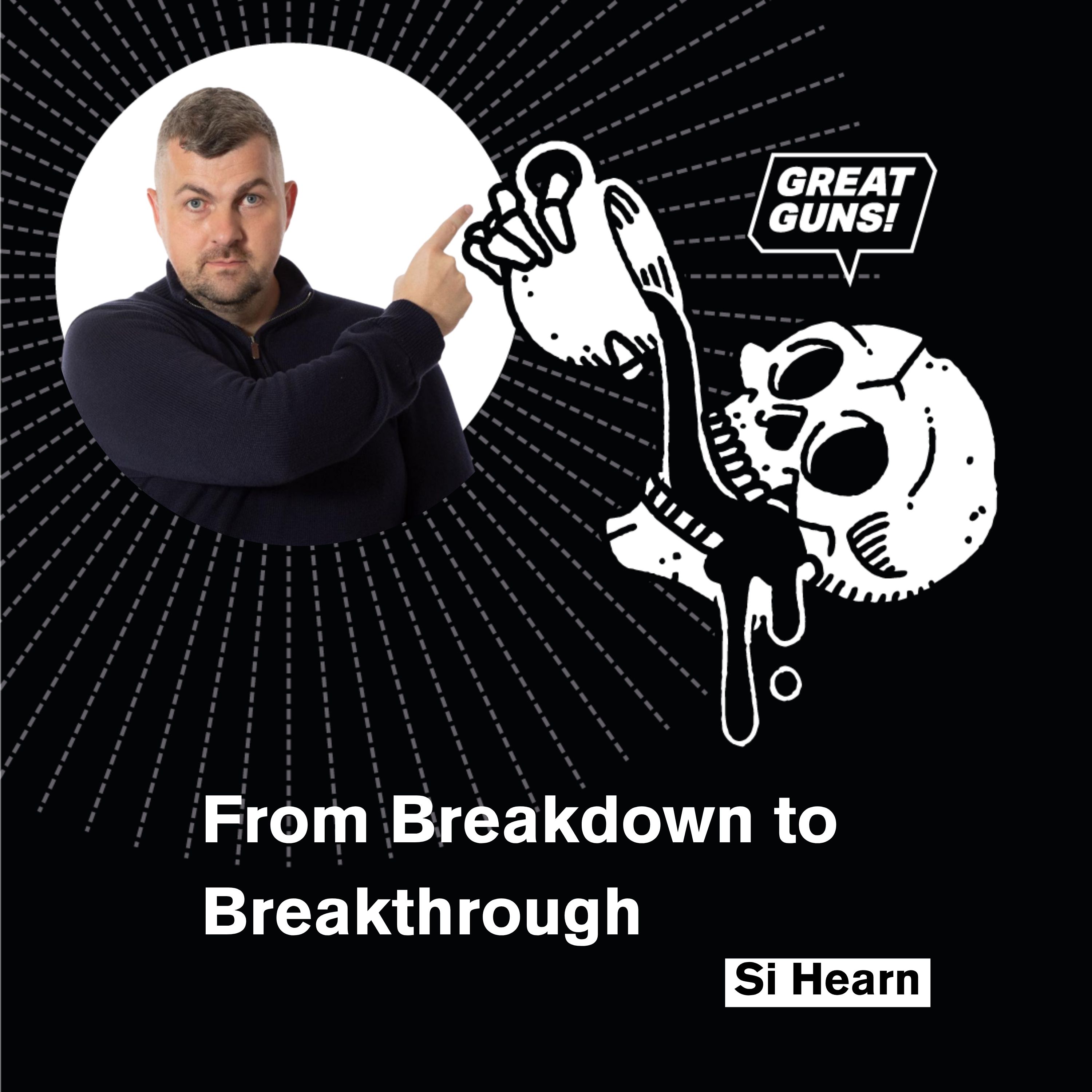
Can a Breakdown Become the Beginning of a Better Life?
Si Hearn on leaving policing, rejecting false security and rebuilding through learning
When a public-service career ends badly, it can feel as though the whole identity has failed with it.
Si Hearn spent 13 years in policing after an earlier career in teaching. Mounting pressure at home and work, poor mental health support and one serious decision made while unwell brought that chapter to an abrupt close.
He now describes the breakdown as a breakthrough—not because the damage was easy, but because it forced him to build a life that was more honest, flexible and his own.
Can a breakdown really become a breakthrough?
It can, when the end of one identity creates space to examine how you were living. Si does not minimise what happened. He accepts responsibility while recognising the conditions and deteriorating wellbeing around it.
The turning point was seeing that the event did not have to dictate the rest of his life. Recovery became an active process of exercise, learning, better listening and different choices.
How does an institution shape identity?
Uniformed institutions offer status, belonging, procedures and a clear place in the system. Over time, the role can become the answer to “Who are you?” rather than one part of a larger life.
Si also noticed how institutional habits had shaped his view of other people. Leaving gave him distance to question those patterns and decide which values to retain.
Is staying for security always the safe choice?
No. Salary, pension and familiarity can look like safety while health, relationships and purpose deteriorate. Si’s advice is not to leave impulsively, but to stop treating employment as life itself.
Real security includes wellbeing, adaptable skills, supportive relationships and the confidence to change direction.
A secure role can still become an unsafe life when identity, health and choice are slowly surrendered to it.
What transferable skills do police officers and veterans have?
They can communicate under pressure, follow and improve systems, learn procedures, solve practical problems and work with diverse people. Si also drew on computing and networking skills that had sat alongside his formal role.
The challenge is not a lack of capability. It is translating evidence into civilian language: what changed because of your judgement, communication or leadership?
How can learning rebuild identity?
Si replaced passive evenings with webinars and study, developing skills in digital marketing and artificial intelligence. Learning gave him progress he could control and a future that was not dependent on his old badge.
Education can be especially powerful during transition because it creates both competence and a new peer group. Each small skill widens the story you can tell about yourself.
Why is progress more useful than perfection?
Perfection keeps reinvention theoretical. Si’s approach is to move, test and improve. A first offer, conversation or project does not have to define the rest of your career.
This matters for people trained to avoid mistakes. Civilian experimentation can feel uncomfortable, but imperfect action is often how the next mission becomes clear.
What does purpose look like after policing?
For Si, it includes business, freedom, relationships and continual development. Purpose is no longer supplied by an institution; it is assembled through choices that support the life he wants to lead.
That freedom also demands responsibility. He must keep learning, care for his health and remain honest about where old patterns could return.
Final Thought
Si Hearn’s story is not a simple tale of everything happening for a reason. It is a story of refusing to let one ending become a permanent definition.
The skills survived. The identity changed. A better life began when he accepted that reinvention was possible.
If your role ended tomorrow, which part of you would still be ready to build?
Listen to the episode > Full Episode